 LongFeather
Industry Insights · Practical Guide
Build a 24/7 Market Strategy Team with AI Agents
Five AI agent roles for monitoring competitors, reviewing evidence and turning weekly findings into decisions.

At Monday's meeting, the ecommerce team pulls up a ranking: a competitor's travel-size perfume has moved up. The content team finds last week's creator videos, and operations finds a livestream coupon. Then comes the question: “Do we spend more on creators next month, or build a discovery set first?” The team has a dozen screenshots and still has to piece together when the product launched, when the coupon appeared, and when the ranking moved.
This guide is for brand leads, market strategy teams and operators who make decisions about products, channels and budgets. A shared record of competitor activity gives those teams a way to check what happened, what the evidence supports, and what their next budget can help them learn.
AI agents can monitor sources on a schedule, save evidence, compare changes and organize options for the team. Brand owners define the question, decide what to fund and feed test results back into the workflow. A 24/7 team can keep that workflow running: check each source at its own cadence, flag important events and produce a weekly report.
We use an Indonesian fragrance study to illustrate five roles. A small team can run the same agent in five stages and review the output at each handoff.
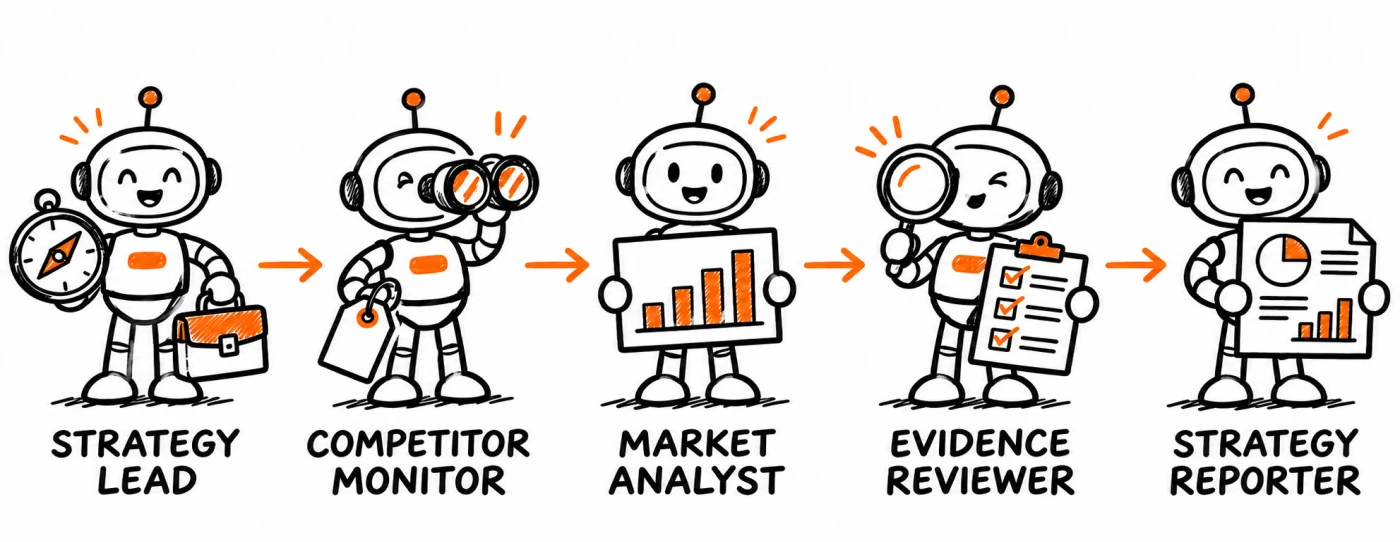
01 Strategy Lead Agent | Turn a business decision into a research brief
Start with a decision. Should the next budget reach more people, or make it easier for people already interested in the fragrance to try it and buy a full bottle? The strategy lead defines what to observe: competitors' trial offers, where your customers drop off, and the fulfillment and acquisition costs of each option.
The brief records the market, channels, category, brands and priority SKUs. For each item, specify the source, cadence, alert threshold, owner and decision it can affect. A new discovery set for a priority SKU can trigger a review. A routine creative change can go in the weekly report. The brand team approves scope, spending and external actions.
Output Research brief, competitor watchlist, metric definitions and decision list. Every role works from the same brief so weekly comparisons use a consistent scope.
02 Competitor Monitor Agent | Record marketing activity as a timeline
Review authorized data, public listings, brand accounts and visible livestream schedules. Record launches, size changes, coupons, gifts, clusters of creator posts, featured livestream products and offline collaborations. Attach the original link, publication and observation times, before-and-after snapshots and visible metrics. Group the same campaign across platforms while preserving differences in price and creative.
For a travel spray, record whether the list price changed or a coupon applied during one livestream, and whether the change persisted. Flag inaccessible pages, unknown campaign dates and unavailable sales data for review. Public posts can be scanned daily, while rankings follow their publication schedule.
Output A searchable event log, snapshots of priority SKUs and alerts when changes meet agreed thresholds.
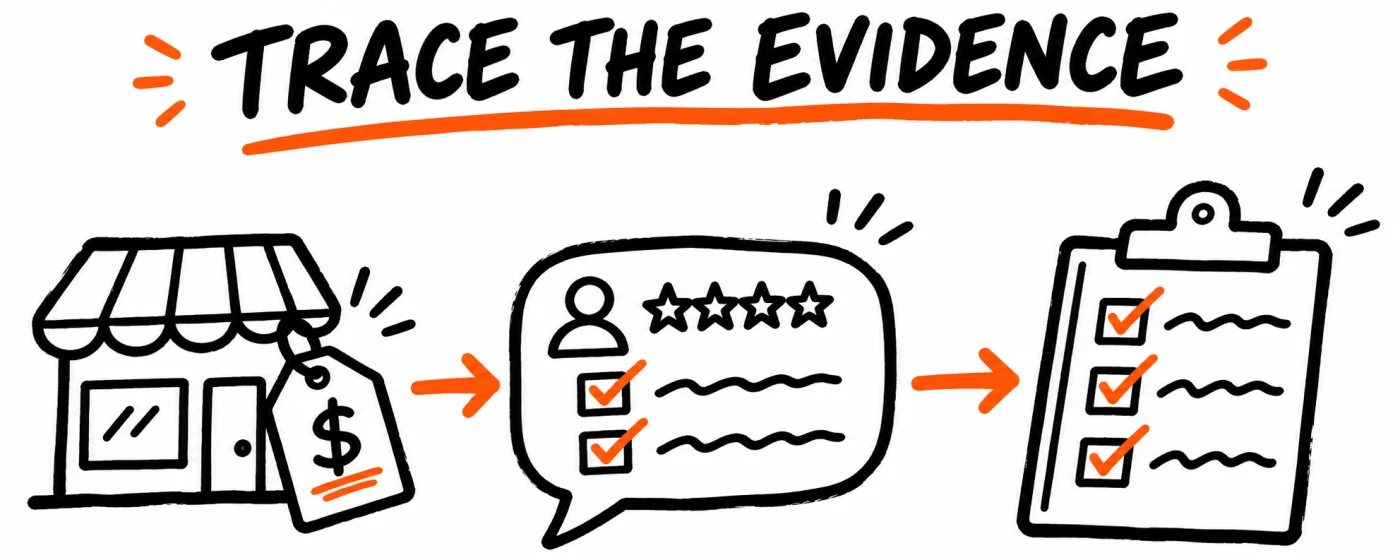
03 Market Analyst Agent | Put each event in market and consumer context
Start with a baseline. Track sales-value share and rank by quarter, then compare prices and channel performance for matching platforms, products and time windows. Code product claims and customer comments separately. “Long-lasting” in a listing can prompt questions about whether a scent feels too strong at work or is still perceptible after hours in warm, humid weather.
Compas put Mykonos first in both the first and second quarters of 2026, with its share rising from 5.27% to 6.78%. The same five Indonesian brands remained in the top five, while positions two through five changed order. Their combined share rose from about 19.0% to 23.9%. Track the leading brands alongside narrower price bands and use occasions. These figures cover the Indonesian Shopee fragrance category monitored by Compas.
Compas Q1 ranking · Compas Q2 ranking
In our July 2026 snapshots, Octarine's 50 mL products were priced at about Rp76,000–103,000 and SAFF & Co. travel sizes at about Rp85,000–109,000. The price overlap suggests a hypothesis: shoppers may pay for a small, easy-to-understand fragrance experience. Their reasons for buying and their conversion to full-size products still need testing.
Output Market landscape, price and size comparisons, customer feedback themes and hypotheses ranked by evidence, with supporting observations, counterevidence and gaps.
04 Evidence Reviewer Agent | Check how far the evidence takes you
Open the original sources and verify product sizes, coupon conditions, ranking dates and sales definitions. Costly or hard-to-reverse decisions require stronger independent evidence. Two articles quoting the same ranking still trace back to one source.
In an Indonesian beauty report for October 12–17, 2026, five of seven featured fragrance listings had an average order value below $5. Mykonos Dreamscape had an average order value of $17.88, with livestreams as its main sales channel. Its listing contained both 50 and 100 mL sizes, so the figure is a listing-level order value. This small sample of featured products supports testing a higher order value. Estimating a market-wide figure or the incremental effect of livestreaming requires additional data and a comparison.
Output An evidence review that marks each claim as verified, pending or unsuitable for use and states the narrowest defensible conclusion. Product claims, compliance and launch actions go to the responsible team for review.
05 Strategy Reporter Agent | Connect the weekly report to a decision
Start the report with the three changes that matter most. For each, explain what happened, how it was verified, what it means for the brand and what to do next. Compare two consecutive seven-day periods and use monthly or quarterly reviews for longer trends. Revisit last week's judgments as new tests and evidence arrive.
If competitors keep featuring travel sizes in livestreams, the report might propose testing a standalone sample set against a sample offer that credits the purchase toward a full bottle. The test brief specifies audience, channel, budget, comparison, metrics and decision date. Track full-size conversion alongside sample, fulfillment and acquisition costs. Missing comparable evidence can become a collection task or a small test.
Output A one-page weekly report, linked monitoring records and a test brief with an owner, review date and criteria for scaling.
Prepare this week's brand market strategy report.
Use Western Indonesian Time. Compare the latest seven days with the previous seven using the same watchlist.
List the three changes with the greatest business impact. Include each event, link, timestamp, implication and proposed action.
Revisit last week's three judgments and mark each as retained, revised, overturned or lacking evidence.
Write one test brief with the owner, comparison, metrics, costs and review date.
Flag collection failures, changes in definitions and open questions.
How the five agents answer one budget question
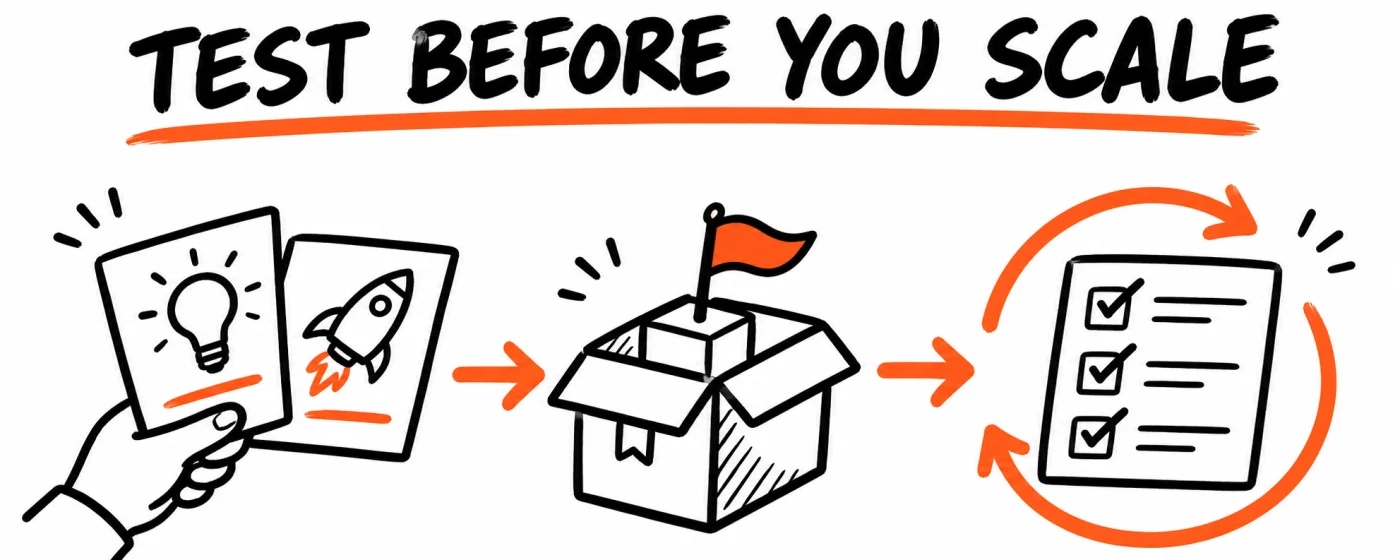
Back at Monday's meeting: should we spend more on creators, or build a discovery set first? Here is how the agents would use the Indonesian fragrance evidence to answer.
- Strategy Lead Define the choice as reaching more people or improving the path to purchase for those already interested. Ask the monitor to track comparable offers and ask operations for store-visit, sample and full-size purchase data.
- Competitor Monitor Hand over product sizes, price ranges and observation dates for Octarine's 50 mL products and SAFF & Co. travel sizes. Flag sample-to-full-size conversion as unavailable on the public listings.
- Market Analyst Propose testing a smaller size as a first purchase. Shoppers could be paying for a convenient trial, or responding to the price, promotion or content. Pass both explanations and the evidence needed to test them to the reviewer.
- Evidence Reviewer Confirm that the price comparison supports a small test. Your own conversion data and the expected return from additional creator spending are still missing. Record which findings are verified and which remain open.
- Strategy Reporter Propose a small test using one or two hero scents. With comparable content and traffic sources, compare the standard full-size offer with a trial offer that credits the sample toward a full bottle. Record the owner, budget cap, timing, conversion and costs for the brand team's approval.
The strategy lead brings results into the next cycle. If incremental full-size purchases cover the added costs, refine the offer and consider scaling. If samples sell but few buyers move to full size, have the analyst locate where buyers drop out. If the offer converts and reach is the constraint, test additional creator activity. The next report records what changed and why.
Keep a weekly record of scheduled and actual runs, source coverage and report locations. Alert the owner when a run is missed or collection fails. The team can then trace a budget decision to its evidence and see which test changed it.